
Chasing Waterfalls: Top 5 Hidden Falls Worth the Hike (and the Shot!)
Chasing Waterfalls: A photographer-friendly guide to 5 hidden waterfalls around the world. Learn the best shots, when to visit, realistic costs, booking tips and what to pack for each location.
by Melissa
10/8/20257 min read
Chasing Waterfalls
If you’re chasing that perfect waterfall shot—the turquoise plunge, the veil of spray, canyon light hitting the foam—sometimes the best falls aren’t the busiest ones. These five lesser-crowded (but utterly photogenic) waterfalls reward the traveler who’s willing to hike, paddle, or go the extra mile. Below you’ll find the destination, best photo angles, when to go, realistic cost ranges, how to snag deals on stays/flights/transfers/excursions, packing + what to expect, and quick links you can swap with your affiliate IDs. Let’s go chase water.
1) Havasu Falls — Havasupai Reservation, Arizona, USA
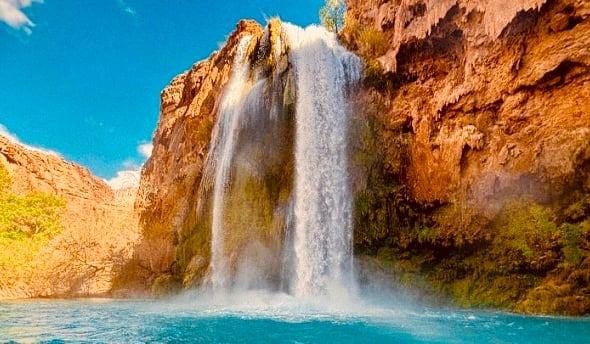
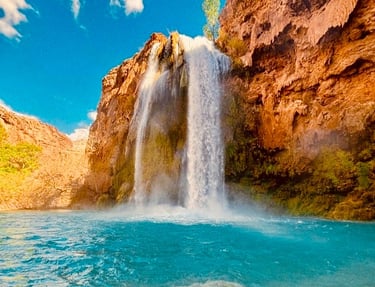
Why it’s special: the impossible turquoise pools tucked into red Grand Canyon walls feel like a dream—otherworldly color and multiple cascades (Havasu, Mooney, Beaver) make for multiple shoot options.
Best shots: wide-angle at sunrise from the rim for the sweeping canyon + pool; low-angle from the blue pool edge to emphasize color; long exposure on tripods for silky water at dusk. Mooney Falls provides dramatic foreground rock framing.
When to go: late fall through spring for cooler hiking; avoid extreme summer heat (trail closures at >115°F). Permits & access: reservations (camp or lodge) are required—fees and minimum-stay rules are enforced; recent campground reservation minimums and pricing have changed in the past years, so check the official reservation site before planning.
Average cost (per person, typical trip): $450–$1,200+ depending on whether you reserve campground vs lodge, plus costs to reach Hualapai Hilltop (fuel/parking), pack mule fees if used, and guided transfers. Expect permit/camp minimums that inflate last-minute trips.
How to find deals: book flights early (use Kiwi.com and CheapOair price alerts), compare lodgings in nearby towns (Peach Springs/Grand Canyon Caverns) on Booking.com/ Expedia, and monitor the Havasupai reservation cancellation lists for sudden openings. If you want a guided comfortable option, search Klook for guided logistics from nearby towns.
What to pack & expect: desert hiking pack, 10-mile out-and-back on dirt trails with steep canyon sections. Bring a high-SPF hat, 3L+ water system, first-aid, tripod (collapsible), ND filters for long exposures, waterproof sandals for the pools, and bear-/wildlife-aware food storage for campsite. Be prepared for limited cell service and strict reservation ID checks.
2) Uluwehi (Secret) Falls — Wailua River, Kauai, Hawaii, USA
Why it’s special: accessed by a scenic paddle then a short jungle hike, Secret Falls is dramatic and photogenic—tropical greenery + clear plunge pools make for lush compositions.
Best shots: kayaking approach shots (wide), intimate portraits under the falls, and vertical frames to show scale. Use a polarizer to cut glare and boost foliage saturation. Early morning light yields fewer tour groups and softer light.
When to go: year-round, but avoid heavy rain season if you’re kayaking (flash floods on small rivers are risk factors). Many operators run half-day kayak + hike trips; guided tours are recommended for safe access.
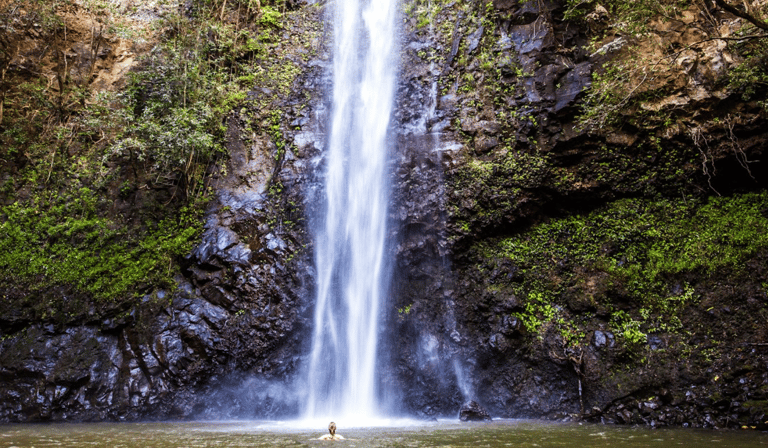
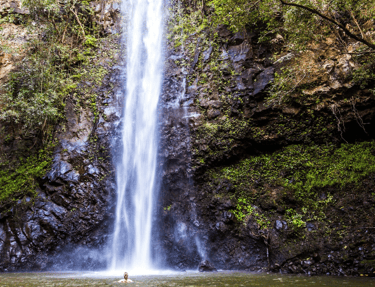
Average cost: guided kayak + hike tours typically $60–$150 per person depending on operator and inclusions. Add accommodations on Kauai (budget to luxury) and inter-island flights if coming from Oʻahu/Maui.
How to find deals: compare Booking.com/Agoda for local stays; Klook or GetYourGuide for kayak+hike bookings (watch cancellation/refund policies). If you book ferry/transfers or add photography workshops, check package discounts. Consider airfare price-tracking on Kiwi.com/CheapOair.
What to pack & expect: reef-safe sunscreen, water shoes that strap on, dry bag for gear, quick-dry clothing, waterproof phone case, and basic snorkeling kit if you plan to explore elsewhere on Kauai. Expect damp trails; insect repellent and reef-safe sunscreen are essential.
3) Lower Calf Creek Falls — Grand Staircase-Escalante area, Utah, USA
Why it’s special: a 126-ft waterfall framed by desert canyon walls—unexpectedly lush and photogenic in an otherwise arid landscape. The sandy approach and the pool make for amazing contrast images.
Best shots: wide compositions of the waterfall against the canyon wall; use a telephoto for compressed canyon details; golden hour side lighting creates texture on the rock. Pack a small tripod for long exposures.
When to go: spring and fall are ideal—temperatures are milder and vegetation tends to be greener after winter/spring rains. Day-use fee is small; permits usually not required but check local BLM/monument pages.
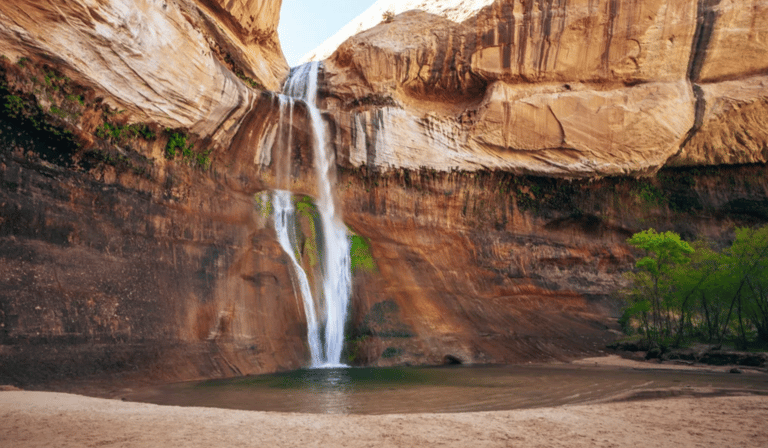
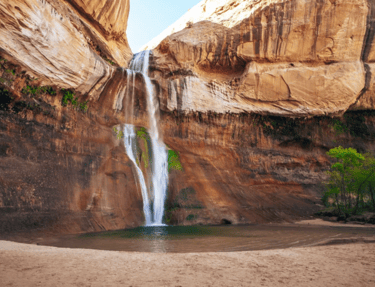
Average cost: minimal — a $5 day-use fee per vehicle (BLM), parking and basic fuel for remote drives, plus lodging nearby (budget to midrange). If you’ll visit multiple parks, an America the Beautiful annual pass can save money.
How to find deals: combine road-trip lodging on Booking.com/ Expedia /Hostelworld; compare car rental options (DiscoverCars / rentalcars.com) and search multi-stop flight + car packages on Expedia or Kiwi for savings. Consider camping permits in the area for the lowest cost.
What to pack & expect: 5.5-mile roundtrip hike on sandy/dirt trail—good shoes, sun protection, 2–3L water, snacks, camera with polarizer/ND filter. Expect a sandy “beach” at the pool and limited shade; in summer it can be hot—start early.
4) Kuang Si Falls — Luang Prabang, Laos
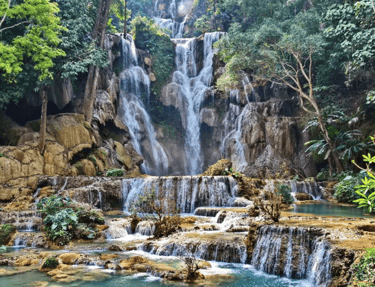
Why it’s special: tiered turquoise pools set in jungle near Luang Prabang—lush, photogenic, and accessible as a day trip from town. The multi-tier cascades and swim-friendly pools make for travel-friendly photo ops.
Best shots: wide shots from the lower tiers to show pools; mid-range shots across turquoise water with limestone cascades; candid lifestyle shots of locals/visitors swimming. Early morning beat the crowds.
When to go: dry season (roughly November–March) for stable roads and cooler temperatures; early morning entry reduces crowds. Entrance fees are low and locally managed.
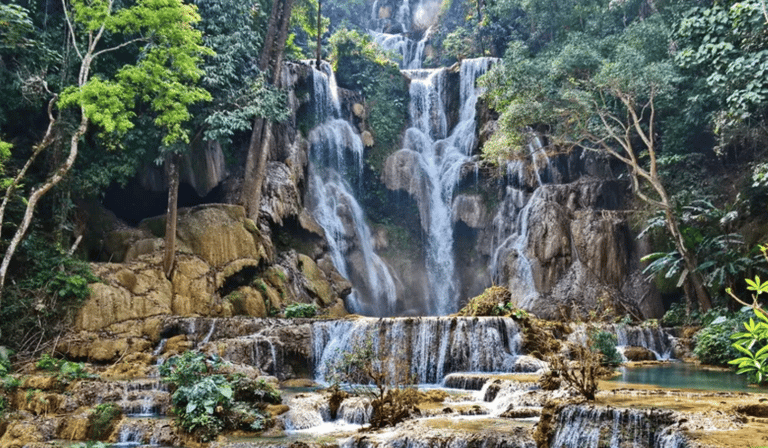
Average cost: minimal entrance fee (commonly a few USD or ~20,000–65,000 LAK per person depending on updates). Add tuk-tuk or rental car transfer from Luang Prabang (very affordable), and accommodation costs in town.
How to find deals: book Luang Prabang stays on Agoda/Booking.com (great coverage in SE Asia), compare private transfers or small-group tours on Klook/GetYourGuide, and bundle domestic transport if flying internally (search Kiwi/comparison engines).
What to pack & expect: swimwear, towel, water shoes (slippery rocks), insect repellent, and sun protection. Expect an organized park with stalls near the entrance; pay the small fee at the gate. Keep cash in LAK for the entrance and vendors.
5) Baatara Gorge (Baatara Pothole) — Tannourine, Lebanon
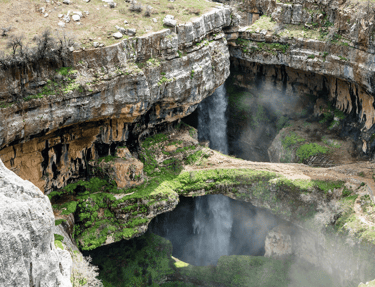
Why it’s special: a cinematic three-bridge limestone sinkhole with a waterfall that drops into a giant natural amphitheater—spectacular vertical geology and a dramatic seasonal flow that photographers crave.
Best shots: telephoto/vertical frames that show the waterfall through the natural bridges; shoot from viewpoints above for scale shots that include the rim and valley. Spring (snowmelt) yields the most impressive flows.
When to go: spring (when snowmelt swells the falls) is peak photographic season; access may be via mountain roads—check local travel advisories and seasonal conditions.
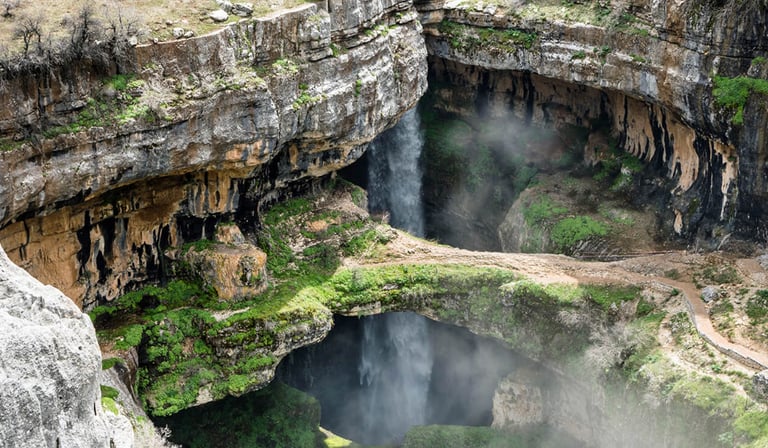
Average cost: low entrance fees or parking donations in many areas; transport from Beirut (hire a driver or join a day tour); midrange costs for local hotels. Guided tours that combine Jeita Grotto/Byblos + Baatara run as half or full-day excursions.
How to find deals: look for combined day tours on GetYourGuide; compare hotel rates on Booking.com/ Agoda; car hire services including DiscoverCars or local rental agencies via rentalcars.com can be competitive for multi-day itineraries.
What to pack & expect: sturdy shoes for uneven paths, wind/rain jacket (mountain weather is changeable), tripod for long exposure compositions, and local currency for small purchases. Expect short climbs and viewpoints that can be exposed—bring layers.
Photography & Safety Quick Tips (applies to all five)
Bring a lightweight carbon-fiber tripod and an ND filter for long exposures of silky water.
Use a polarizer to reduce reflections and boost foliage color.
Shoot during golden hour for softer side light; for turquoise pools, overcast skies can actually help reduce blown highlights and keep color even.
Respect local rules: some parks restrict drones or swimming—check signage and official guidance.
Always pack a small first-aid kit, extra water, and a headlamp if you’re doing early/late access.
Leave no trace—pack out what you pack in and avoid trampling sensitive vegetation.
Costs & Deal-Finding Strategies (fast guide)
Flights: set price alerts on Kiwi.com and CheapOair; search multi-city if hitting multiple waterfalls.
Accommodation: compare Booking.com, Agoda, Expedia, Hostelworld (for budget options).
Transfers & car hire: compare DiscoverCars, rentalcars.com, and local providers; reserve early for seasonal peaks.
Tours & experiences: Klook, GetYourGuide, or local operators—read recent reviews and cancellation policies.
Bundles: sometimes Expedia packages (flight+hotel+car) or Booking.com long-stay discounts save money; compare both.
Use a VPN (NordVPN) if your region shows inflated pricing—sometimes prices vary by region. (Pro tip: always clear cookies or use incognito when searching fares.)
Packing Checklist (photography + hike edition)
Daypack with rain cover, 2–3L water, electrolyte mix
Lightweight tripod, ND filter (6–10 stop), circular polarizer
Fast prime and a wide-angle zoom (24–70 equivalent) + tele for compressed shoots
Waterproof phone case, dry bag, spare batteries/SD cards
First aid, sunscreen (reef safe where required), insect repellent
Quick-dry clothing, gaiters or water shoes, hat, light rain shell
Copies of reservations, printed permits if required